OpenAI now gives businesses a way to see how often they show up in ChatGPT. On November 6, Search Engine Roundtable reported that OpenAI was building a Search Console-style tool for ChatGPT. Four days later, OpenAI released it in beta as part of a larger feature called Businesses in ChatGPT. Through the new Business Hub, a verified business can track how often ChatGPT mentions it and how many clicks those mentions send to its website.
For years, businesses have tracked search visibility through Google rankings, impressions, and clicks. AI search hasn’t offered the same level of insight. You could ask ChatGPT a few questions about your industry to see if your company appeared in the answers, but there were no first-party analytics to measure your visibility.
That’s beginning to change, but the available data still has limitations. Let’s look at what ChatGPT business analytics measures, what it leaves out, and how your business can start improving its visibility in AI-generated search results.
Find out how your business appears in AI-generated search results, which competitors are gaining visibility, and where opportunities exist to reach more qualified buyers.
Get actionable insights to help strengthen your AI search visibility and support your lead generation goals.
What Is Businesses in ChatGPT?
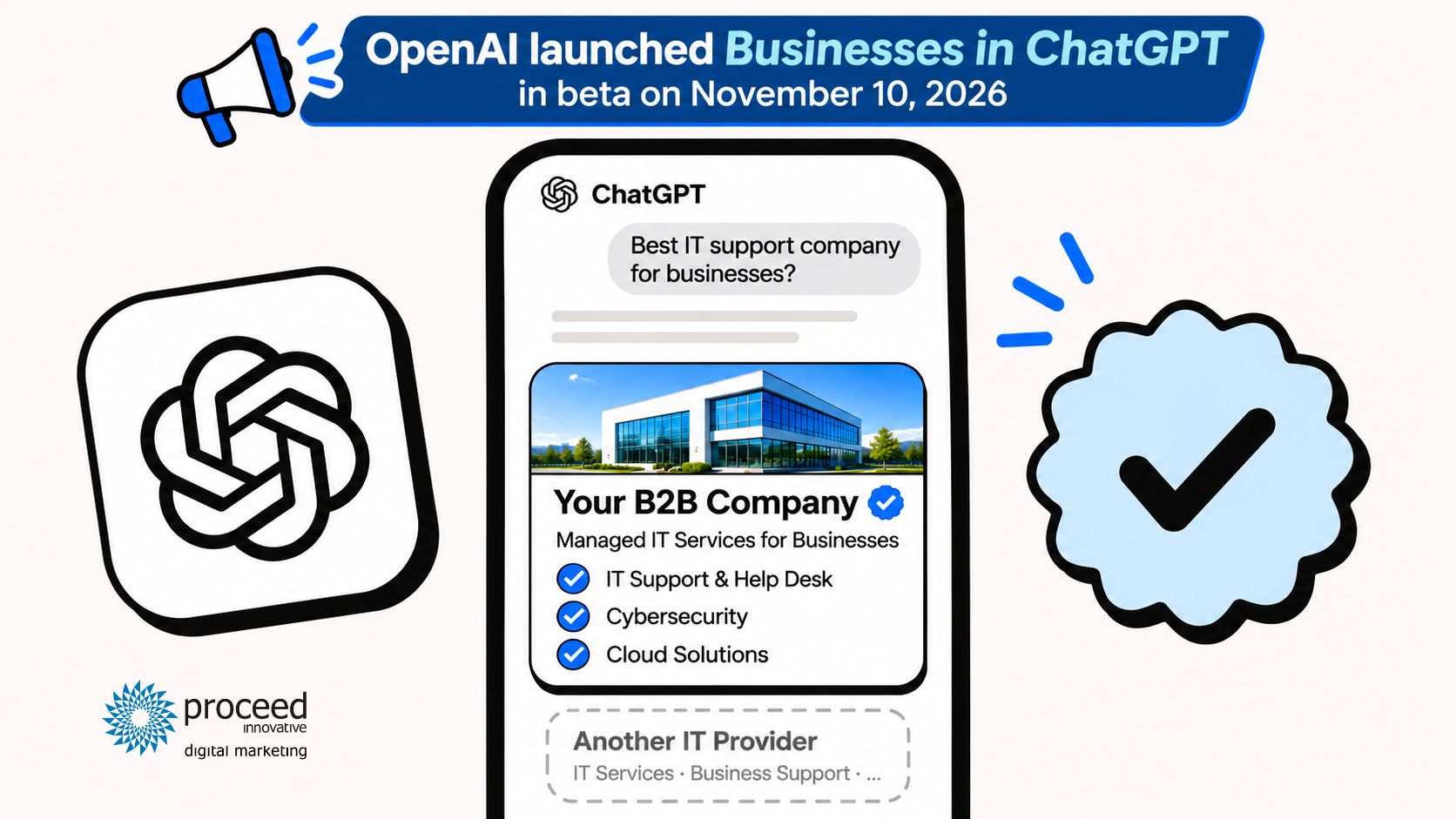
Businesses in ChatGPT is OpenAI’s new program that allows companies to claim their presence on the platform, manage the information displayed about them, and track how users interact with their profiles. OpenAI introduced the program in beta on November 10, 2026, giving businesses a new way to connect with the millions of people who use ChatGPT each week.
The program has three parts:
- Business profiles: Any eligible business located where ChatGPT is available can claim its business through Business Hub. Once verified, the business can update its key details and add product feeds with current pricing and availability.
- Insights: Business Hub shows aggregated data on how people engage with the business in ChatGPT, including mentions, website clicks, and discovery topics.
- Business Agents: Eligible ecommerce and online service businesses in the U.S. can set up an agent that answers customer questions inside ChatGPT using the business’s own information. A customer comparing two products, for example, could ask the agent how they differ and which one fits their needs.
OpenAI describes the goal as giving businesses a direct way to provide information to ChatGPT, so people see accurate and current details when they research products and services. The company has also said it plans to expand the program to more markets and business categories.
Proceed Innovative is proactively testing Businesses in ChatGPT so we can guide our clients from hands-on experience as the beta develops. If you’re interested in claiming your business in ChatGPT or want more information, contact Proceed Innovative or call (800) 933-2402.
What Is OpenAI Building for Businesses?
For most businesses, the day-to-day value of this launch is in Business Hub, the dashboard where a verified business manages its ChatGPT presence.
Based on the November 6 report and what has launched since, Business Hub allows businesses to:
- Track how often their business is mentioned in ChatGPT responses.
- See the impressions and clicks generated from ChatGPT.
- Add products and keep business information updated.
- Give customers access to a Business Agent that answers questions using information provided by the business.
To get access, a business must claim its profile and verify ownership. According to Search Engine Roundtable’s follow-up coverage, businesses can verify by text message or phone call to their main business number or by adding a DNS record. Shopify merchants can also connect their store directly.
ChatGPT is becoming more than a platform for asking questions. OpenAI says 1.2 billion people use it each week, and it is giving businesses new tools to manage their presence and engage with potential customers.
What Will ChatGPT Business Analytics Measure?
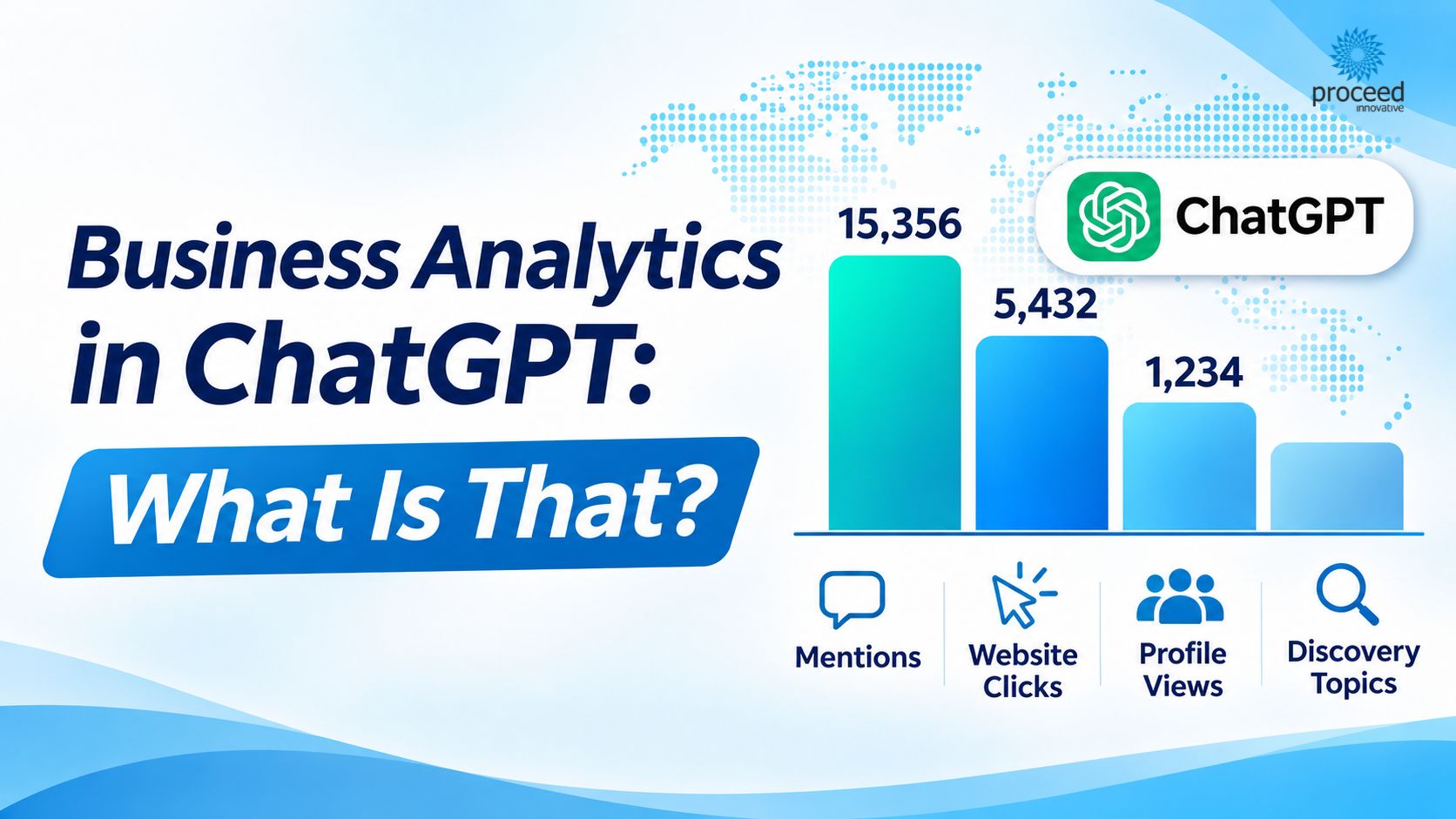
ChatGPT business analytics tracks two key metrics: how often your business appears in ChatGPT responses and how often users click through to your website. The November 6 report referred to these as impressions and clicks, while OpenAI’s dashboard uses the labels “mentions” and “website clicks.”
| Metric | What it means |
|---|---|
| Impressions (mentions) | How often a business appears in ChatGPT responses |
| Clicks (website clicks) | How often users click links to the business website |
The dashboard tracks these numbers daily and charts them over time, so you can see whether your ChatGPT visibility is rising, falling, or holding steady. That trend line is the useful part. A single week of data tells you very little, but three months of it shows whether your content and SEO work is moving the numbers.
The beta version also shows profile views and “discovery topics,” which OpenAI describes as common themes across conversations where your website is cited.
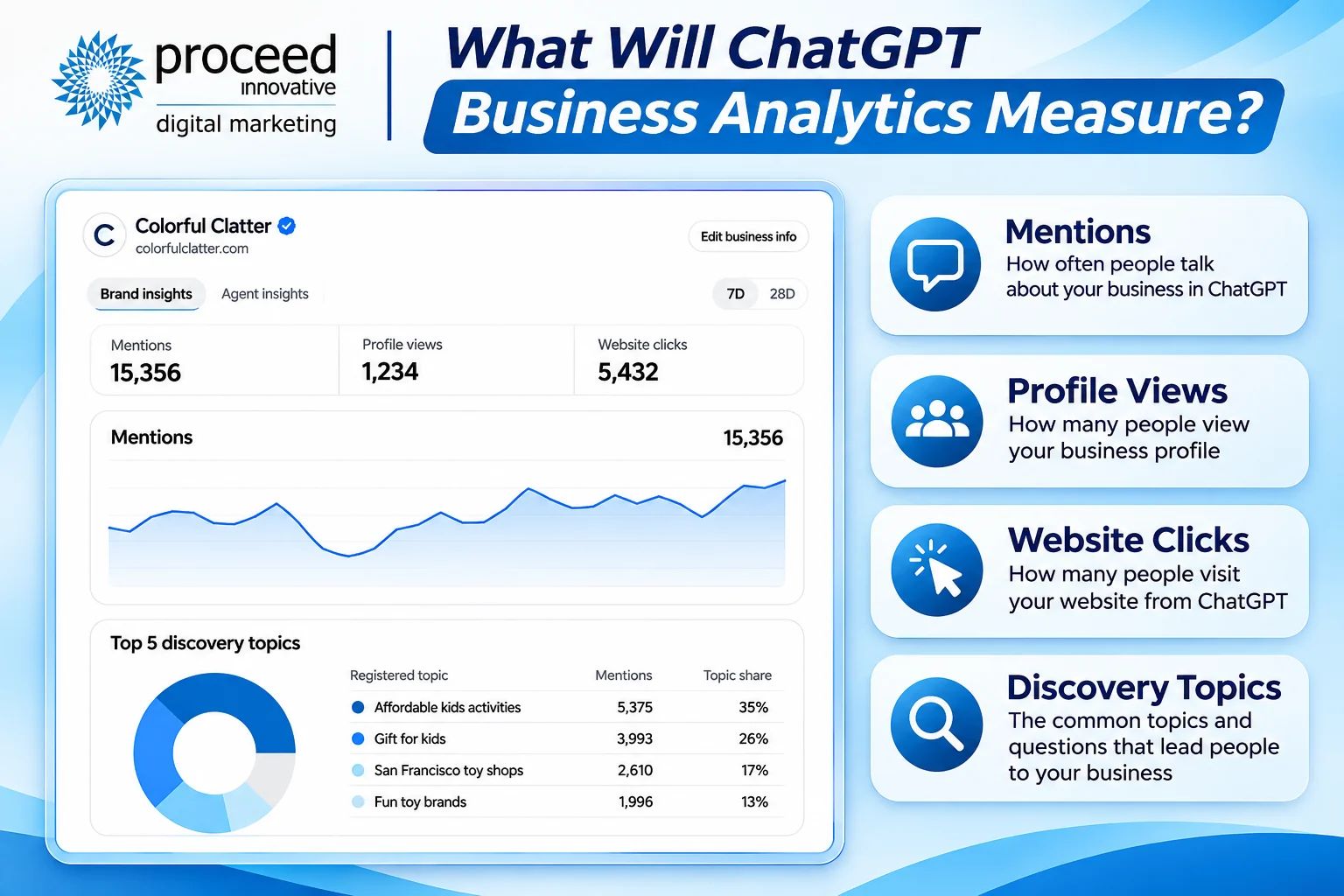
Two details are worth knowing before you read too much into the numbers:
- A click isn’t a confirmed visit: The dashboard’s own help text says clicks don’t confirm website visits or conversions. Compare the figures against the ChatGPT referral traffic in your website analytics.
- Small numbers may not show up: OpenAI says insights are aggregated and only appear once there are enough conversations to meet its privacy thresholds. A business with low ChatGPT visibility may see an empty dashboard at first.
What Businesses Won’t Be Able to See
ChatGPT business analytics shows how often your business appears and attracts clicks, but it doesn’t explain what drives that visibility. Based on the reported features and OpenAI’s privacy notes, businesses won’t have access to:
- The exact questions or prompts users enter.
- Personal information about ChatGPT users.
- Comparisons of their visibility against competitors.
- Detailed explanations for increases or decreases in mentions.
Discovery topics provide some additional context by showing the broader subjects associated with your visibility. However, they don’t reveal the actual prompts users entered. OpenAI also makes clear that it doesn’t share individual conversations with businesses.
Here’s why that gap matters. Say your business appears in ChatGPT 100 times in one week. That number alone doesn’t tell you:
- Which services ChatGPT recommended.
- Which competitors appeared alongside you.
- What questions triggered the recommendation.
- Whether ChatGPT cited your website or another source.
This is why businesses still need ongoing AI visibility monitoring. The dashboard gives you accurate first-party counts. Regularly testing the questions your customers ask, and recording which businesses and sources ChatGPT returns, gives you the context behind those counts. You need both to know whether your GEO and AEO work is paying off.
For B2B marketing leaders, visibility matters when it helps attract the right buyers and supports measurable business growth. Proceed Innovative combines SEO, GEO, AI search monitoring, and digital marketing strategies to help connect search visibility with qualified leads and pipeline opportunities.
Build an AI search strategy aligned with your broader marketing and revenue goals.
Why GEO and AEO Are Becoming More Important
GEO and AEO are becoming more important because businesses can now measure their visibility in ChatGPT. Once that visibility shows up in a dashboard, the next question is obvious: How can you improve it?
Traditional SEO focuses on improving your website’s visibility in search engine results. Generative engine optimization (GEO) and answer engine optimization (AEO) focus on making your business information useful, accessible, and credible enough to be referenced in AI-generated answers. The two overlap heavily. The businesses that show up in AI answers are usually the ones with strong SEO fundamentals already in place.
These are the factors we look at when we work on a client’s AI search visibility:
- Website content: Publish useful pages that directly answer the questions your customers ask.
- Topical authority: Build detailed content around your services, industry, and areas of expertise.
- Business information: Keep company details, services, locations, and contact information consistent everywhere they appear.
- Third-party credibility: Build a strong presence through reputable directories, industry publications, reviews, and relevant websites.
- Structured data: Use appropriate schema markup to help search engines understand your business information.
- Technical SEO: Make sure your website can be crawled and its important content can be accessed.
None of this is a trick for gaming ChatGPT. AI platforms pull from the same web that search engines index, so they tend to reference businesses that are clearly described, consistently listed, and backed up by other credible sources.
Ranking on Google is not the only measure of online visibility anymore. Being mentioned and cited in AI-generated answers is becoming another important part of how businesses get discovered.
How Can Businesses Prepare for ChatGPT Business Analytics?
Businesses can prepare by strengthening the information ChatGPT uses to understand and describe them, including website content, business profiles, and third-party credibility. Although the tool is still in beta and rolling out gradually, these steps are worth taking whether or not you have access yet.
| What businesses should do | Why it matters |
|---|---|
| Audit their website content | Identify missing information and unanswered customer questions |
| Review service pages | Make sure services are clearly explained |
| Check business information | Keep company details accurate and consistent |
| Monitor ChatGPT responses | See whether the business appears for relevant customer searches |
| Track competitors | Understand which businesses AI platforms recommend |
| Review website traffic | Monitor referral traffic from AI platforms |
| Invest in SEO and GEO | Build visibility across traditional and AI search |
If your business is eligible, claim your profile in Business Hub, too. Your initial mention and click counts will give you a baseline to measure against as you make improvements.
You don’t have to wait for OpenAI to start improving your AI visibility. Businesses that update their service pages and listings now will have a stronger foundation and more meaningful numbers to evaluate as their dashboards fill in. Those that wait may simply get a clearer picture of a visibility problem they could have started addressing months earlier.
ChatGPT Analytics vs. ChatGPT Ads: What’s the Difference?
ChatGPT business analytics tracks organic visibility, while ChatGPT Ads measure the performance of paid placements. The two can be easy to confuse because both use metrics like impressions and clicks, but they serve different purposes and answer different questions.
| ChatGPT Business Analytics | ChatGPT Ads |
|---|---|
| Measures organic visibility | Paid advertising placement |
| Tracks business mentions | Tracks paid campaign performance |
| Measures reported impressions and clicks | Measures advertising engagement and results |
| Focuses on organic discovery | Focuses on paid reach |
Search Engine Roundtable noted that the Business Hub feature appears to be separate from ChatGPT advertising and is designed around organic ChatGPT responses. You don’t have to run ads to claim your business, and running ads won’t replace the work of earning organic mentions.
The two do work together. Organic AI visibility builds over time as your content and credibility improve. Paid ads can put your business in front of ChatGPT users right away, at a cost per click or per impression. We covered that side in our guide to how much ChatGPT Ads cost. Most businesses will want to treat them as separate parts of one digital marketing strategy, with separate goals and separate reporting.
ChatGPT Business Analytics FAQs
What is ChatGPT Business Hub?
ChatGPT Business Hub is OpenAI’s dashboard for businesses that appear in ChatGPT. Verified businesses can claim their profile, update their business information, add products, and see insights on how people engage with them in ChatGPT. It launched in beta in November 2026.
Can businesses track how often ChatGPT mentions them?
Yes. Business Hub reports the number of times a business is mentioned in ChatGPT responses, tracked over time. The business has to claim and verify its profile first, and data only appears once there’s enough activity to meet OpenAI’s privacy thresholds.
Does ChatGPT have an analytics dashboard for businesses?
Yes. The insights section of Business Hub works as an analytics dashboard. It shows mentions, profile views, website clicks, and top discovery topics. It’s in beta, so features and eligibility may change.
What is the difference between ChatGPT impressions and clicks?
Impressions, which OpenAI calls mentions, count how often your business appears in ChatGPT responses. Clicks count how often users click a link to your website from ChatGPT. A click doesn’t confirm a completed website visit or a conversion.
Can businesses see which prompts mention their company?
No. Business Hub doesn’t show the exact prompts or conversations that mentioned a business, and it doesn’t share personal information about users. It shows discovery topics, which are broad themes across conversations where the business’s website is cited.
How can I improve my business visibility in ChatGPT?
Publish content that directly answers customer questions, explain your services clearly, and keep your business information consistent across your website and listings. Build credibility through reviews, directories, and industry publications, add schema markup, and make sure your website can be crawled.
What is the difference between GEO and traditional SEO?
Traditional SEO improves how your website ranks in search engine results. GEO, or generative engine optimization, improves the chances that AI platforms like ChatGPT mention and cite your business in their answers. GEO builds on SEO fundamentals and adds a focus on clear answers, consistent business information, and third-party credibility.
Is ChatGPT Business Analytics the same as ChatGPT Ads?
No. ChatGPT business analytics measures organic visibility, meaning unpaid mentions and clicks. ChatGPT Ads are paid placements with their own campaign reporting. A business can use either one without the other.
Start Building Your AI Search Visibility
ChatGPT business analytics gives businesses something they haven’t had before: first-party data on how often they appear in ChatGPT responses. But the numbers alone won’t improve your visibility. That takes the same consistent effort that drives traditional search performance, with a greater focus on how AI platforms interpret, reference, and cite your business.
Proceed Innovative helps businesses improve their visibility across Google and AI search platforms. We can assess how your business currently appears in ChatGPT, identify gaps in your content and business information, and develop a strategy to earn more mentions and website clicks. If you want to expand your reach while organic visibility builds, we also manage paid campaigns, including ChatGPT Ads.
Ready to improve how your business shows up in AI search? Explore our AI SEO services and PPC advertising services, or call (800) 933-2402 for a free consultation.
Your marketing strategy should do more than increase mentions and website traffic. It should help your sales team connect with qualified B2B buyers and contribute to pipeline growth.
Find out where your company stands across AI search, what competitors are doing differently, and which opportunities deserve your marketing investment.
Or speak with a Proceed Innovative strategist: (800) 933-2402
No obligation. Just actionable insights to help you plan your next steps.
About the Author: Proceed Innovative