If you run a small business, your customers are probably searching for you online before they ever call or visit.
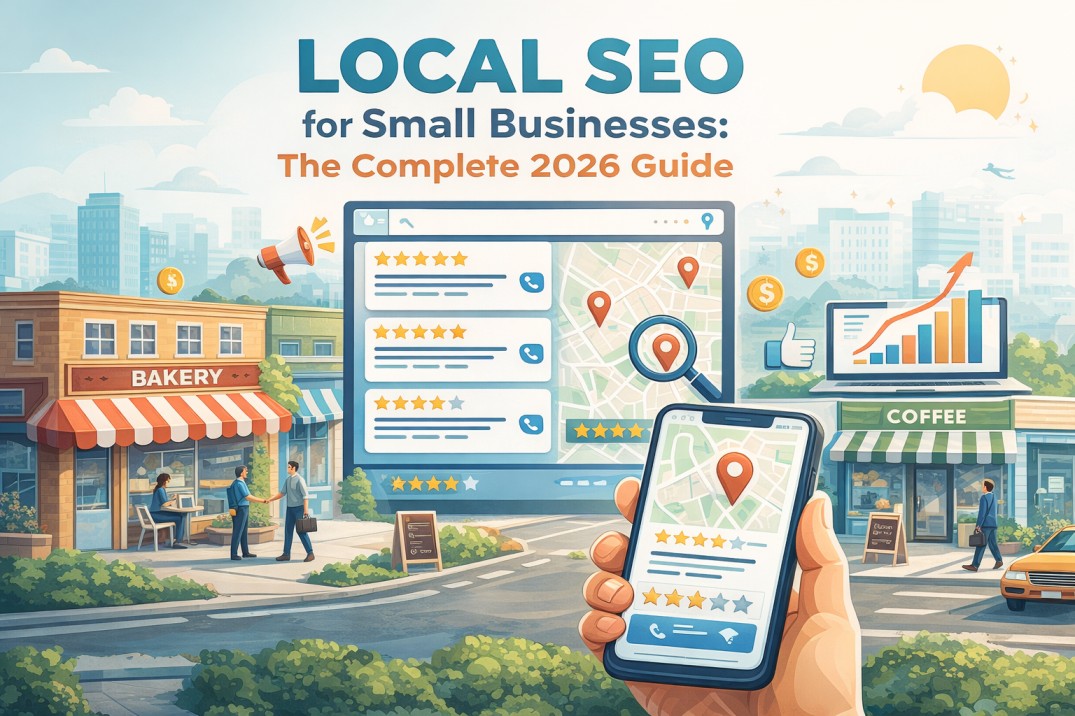
Local SEO is the strategy that helps your business appear when people nearby search for services like yours. It helps your business show up in Google Maps, “near me” searches, and local results, making it easier for potential customers to find and contact you.
For many small businesses, AI SEO delivers one of the highest returns on investment in digital marketing because it connects you with people who are already looking for the service you offer.
In fact, Google reports that 76% of people who search for something nearby on their phone visit a business within 24 hours. That means local search traffic often turns directly into phone calls, appointments, and walk-in customers.
If you’re wondering whether local SEO is worth investing in, the answer is simple: yes — especially if your customers are local.
Let’s walk through how it works.
What Local SEO Actually Means
When someone searches for something like:
- “home care services near me”
- “best plumber in Chicago”
- “roof repair in Dallas”
Google must decide which businesses appear in the search results and map listings.
Local SEO is the process of optimizing your online presence, so Google understands that your business is relevant, trustworthy, and located in the area the searcher needs.
This differs from traditional SEO.
Traditional SEO targets broader searches like:
- marketing automation software
- project management tools
- online accounting software
Local SEO focuses on geographically specific searches that connect nearby customers with nearby businesses.
The 3 Key Factors That Influence Local Rankings
Google evaluates three major signals when ranking local businesses.
Relevance
Relevance measures how closely your business matches what someone is searching for.
For example, if someone searches for “senior home care services”, businesses that clearly provide senior care services will be more relevant than general healthcare providers.
The clearer your services are online, the easier it is for Google to understand your business.
Distance
Distance refers to how close your business is to the person searching.
Google uses the searcher’s location to show nearby businesses first. While you can’t change your physical location, you can make sure Google clearly understands where you operate.
This means properly listing your:
- address
- service areas
- business location
- local service pages
Prominence
Prominence reflects how well-known and trusted your business appears online.
Google evaluates things like:
- customer reviews
- website authority
- backlinks from other websites
- mentions across directories
- media coverage
The stronger your online reputation, the more likely Google will rank your business higher.
Optimize Your Google Business Profile
Your Google Business Profile (GBP) is the most important asset for local search.
This is the listing that appears in:
- Google Maps
- the Local Map Pack
- business knowledge panels
For many searches, your Google Business Profile is the first impression customers see of your business.
To fully optimize it:
- claim and verify your listing
- choose the correct primary category
- add accurate service descriptions
- upload real photos of your team and work
- update your business hours
- publish regular updates or posts
A complete and active profile signals to Google that your business is legitimate and engaged.
Generate and Manage Customer Reviews
Online reviews play a major role in both local rankings and customer trust.
Google looks at:
- number of reviews
- review freshness
- overall rating
- how businesses respond to reviews
A steady flow of genuine reviews tells Google that customers actively engage with your business.
Create a simple process to request reviews from satisfied customers. Sending a direct link makes it easy for them to leave feedback.
Equally important is responding professionally to all reviews, whether positive or negative.
Optimize Your Website for Local Search
Your website supports your local SEO efforts by reinforcing where you operate and what services you offer.
Key improvements include:
- including city or service area in title tags
- displaying your business address and phone number clearly
- ensuring fast mobile performance
- creating service pages that mention your location
- adding structured data (schema markup)
If you serve multiple cities, it’s helpful to create dedicated pages for each location so search engines understand your geographic coverage.
Create Local-Focused Content
Publishing locally relevant content strengthens your connection to the community and helps attract regional search traffic.
Examples of local content include:
- guides specific to your city
- service advice related to regional conditions
- community involvement stories
- local business partnerships
For example, a home care agency might write about how families can choose the right caregiver in their area, while a contractor might create seasonal maintenance tips based on local weather conditions.
Local content helps build authority and attracts links from nearby organizations.
Common Local SEO Mistakes to Avoid
Many small businesses struggle with local visibility because of a few common mistakes.
These include:
Inconsistent business information
Different addresses or phone numbers across directories can confuse search engines.
Ignoring reviews
Failing to request reviews or respond to them weakens trust and rankings.
An incomplete Google Business Profile
Listings without photos, updates, or accurate details often perform poorly.
Poor mobile experience
Most local searches happen on smartphones. Slow or difficult mobile websites lose customers quickly.
Trying to target too many locations too early
Small businesses should focus on dominating their immediate market before expanding.
Should You Handle Local SEO Yourself or Hire an Expert?
Many small business owners start by managing the basics of local SEO themselves. Tasks like claiming and optimizing your Google Business Profile, asking customers for reviews, and keeping your website information updated are all things you can do without hiring outside help.
However, successful local SEO requires consistent effort and ongoing optimization. Managing listings, creating local content, monitoring reviews, and improving rankings all take time.
If you prefer to focus on running your business, partnering with a professional local SEO agency can be a smart investment. An experienced team can manage the strategy, track performance, and continuously improve your visibility in local search results.
If you’re unsure where your business currently stands, start with a free local SEO audit to evaluate your online visibility and identify opportunities for improvement.
About the Author: Patrick Panayotov