Today, customers are increasingly finding answers through AI-powered search experiences—from Google’s AI Overviews to conversational tools like ChatGPT, Co-pilot, voice assistants, and other generative platforms. These systems don’t simply list websites. They summarize, recommend, and decide which brands get mentioned.
This shift has created a new marketing discipline: Generative Engine Optimization (GEO).
For businesses planning their 2026 marketing strategy, the question is no longer whether GEO matters—but how much to invest. For most organizations, allocating around 20% of the marketing budget to GEO is a practical, forward-looking approach that balances innovation with stability
What Is GEO (Generative Engine Optimization)?
GEO is the practice of optimizing your brand, content, and digital presence so that AI-driven search engines can understand, trust, and advise your business in generated answers.
Unlike traditional SEO, which focuses on ranking web pages, GEO focuses on:
- Being cited, referenced, or summarized by AI systems
- Establishing topical authority across an entire subject area
- Structuring content so AI models can extract accurate answers
- Strengthening brand entities, not just URLs
In short, GEO ensures your business appears where search is becoming conversational, contextual, and answer-driven.
How People Fins Businesses Has Fundamentally Changed
Search behavior is evolving faster than most marketing plans.
Today’s users are asking:
- “Who’s the best option for”
- “What should I do if my mom need full time caregiver at home”
- “Which company helps me with solar panel installation…”
AI search tools now respond with direct answers, often without requiring users to click through multiple websites.
This means:
- Fewer traditional organic clicks
- More zero-click experiences
- More trust placed in AI-selected sources
- Fewer brands getting visibility—even if they rank well
If your business is not being referenced in AI-generated answers, you may still exist online—but you’re becoming invisible in decision-making moments.
Why Traditional SEO Alone Is No Longer Enough
SEO is not dead—but it has changed.
Ranking #1 does not guarantee visibility the way it once did. AI Overviews may summarize content from multiple sources and never display your link, even if your page contributed to the answer.
Common challenges businesses are facing:
- Declining organic click-through rates
- Traffic volatility after core updates
- High-quality content being “used” but not credited
- Competitors becoming the default AI recommendation
GEO addresses what SEO alone cannot: AI-level comprehension and authority. GEO vs. SEO
What a GEO Investment Actually Covers
A GEO investment doesn’t replace SEO or content—it strengthens them. Instead of creating something new from scratch, GEO helps your existing content get understood, trusted, and surfaced by AI-driven search tools.
A typical 20% GEO budget supports building clear topical authority around your services, structuring content so AI systems can easily extract answers, and reinforcing your brand, services, and locations as trusted entities.
It also includes creating FAQ-style and conversational content based on real user questions, adding structured data that AI relies on, refreshing key pages for accuracy, and monitoring how your brand appears in AI-generated results.
This isn’t experimental work—it’s essential visibility optimization for how search works today.

Why 20% Is a Smart, Sustainable Starting Point
Allocating around 20% of your marketing budget to GEO works because it’s intentional without being disruptive. It gives businesses room to adapt to AI-driven search without pulling resources away from proven channels too quickly.
This level of investment allows companies to:
- Test and refine GEO strategies without risking core SEO or paid media performance
- Shift budget from underperforming content or outdated optimization efforts
- Build AI visibility gradually and measure what actually works
- Learn which topics, formats, and prompts AI platforms surface most often
For smaller businesses, a 15% allocation may be more realistic, while digital-first brands may exceed 20%. The goal isn’t a fixed percentage—it’s maintaining balance while staying adaptable as search continues to evolve.
What Happens If Businesses Don’t Invest in GEO?
The risk isn’t an immediate drop in traffic—it’s a slow loss of relevance.
Without a GEO strategy in place:
- AI search tools and assistants are more likely to recommend competitors
- Your expertise may inform AI answers, but your brand isn’t credited or surfaced
- Visibility shifts away from your website and toward AI-generated summaries
- Rebuilding authority later becomes more difficult and more expensive
AI systems learn patterns over time. Brands that show up early and consistently are more likely to be recognized as trusted sources. Delaying GEO doesn’t just pause growth—it allows others to define the conversation first.
How GEO Complements SEO, PPC, and Content Marketing
GEO does not replace your existing marketing channels—it strengthens how they work together. By optimizing for generative search and AI-driven discovery, GEO adds structure, clarity, and intent alignment across your entire strategy.
For SEO, GEO helps transform content into clearer, more authoritative resources that AI systems and search engines can easily interpret and surface. For paid search, it improves how PPC landing pages match real user intent, making messaging more relevant and increasing the likelihood of conversion. Content marketing also benefits, as GEO encourages purposeful topic development that remains useful beyond short-term campaigns, extending the lifespan and impact of each asset.
Most importantly, GEO reinforces brand trust. When your expertise consistently appears across AI summaries, search results, and discovery platforms, your brand becomes more recognizable and credible at every touchpoint. In this way, GEO acts as the connective layer that helps future-proof SEO, PPC Marketing, and content marketing efforts as search continues to evolve.
GEO Is Not Optional—It’s the Next Evolution
GEO is not a trend. It’s a response to how search engines—and users—now behave.
Investing around 20% of your marketing budget in GEO is not about chasing AI. It’s about ensuring your business remains discoverable, trusted, and recommended in a world where answers are generated, not searched.
Businesses that adapt early don’t just survive algorithm changes; they become the sources AI relies on.
Ready to Make Your Brand Visible in AI Search?
Let’s evaluate how your current content performs in generative search environments and identify where GEO can drive real visibility and authority.
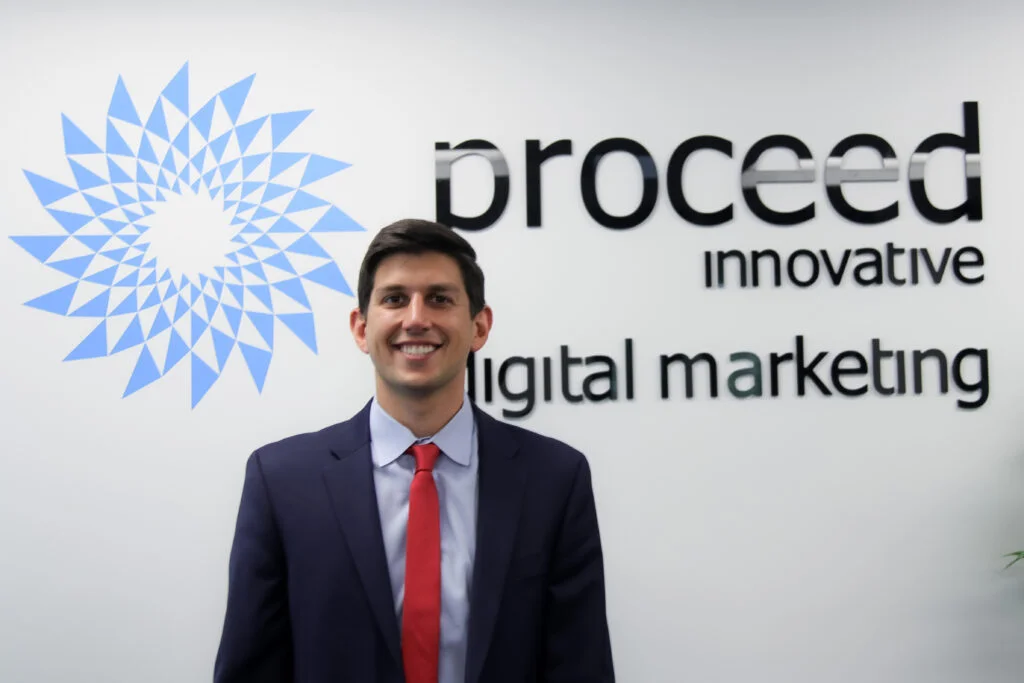
About the Author: Patrick Panayotov