Update: Discover Core Update Rollout Completed
Google has confirmed that the February 2026 Discover Core Update has finished rolling out. According to industry reports and observations, the update primarily impacted content visibility in the Discover feed, affecting publishers, blogs, and websites that rely on Discover traffic.
Recent reporting from Search Engine Journal confirms the rollout has now concluded, giving website owners a clearer picture of how the changes affected content distribution in Discover.
(Source: Search Engine Journal)
Google quietly rolled out a February 2026 core update to Google Discover, and while it may not affect traditional rankings, it can significantly impact traffic for sites that rely on Discover visibility.
If you’ve ever wondered why certain articles suddenly spike in traffic while others fade out without warning, this update helps explain why.
First, what is Google Discover?
Google Discover is the personalized content feed you see in:
- The Google app
- Mobile Chrome’s home screen
Unlike search, users don’t type in a query. Instead, Google proactively surfaces content it believes someone will find interesting based on signals like:
- Location
- Past reading behavior
- Topic interests
- Source preferences
This update changes how Google decides what to show.
What Google is changing with this update
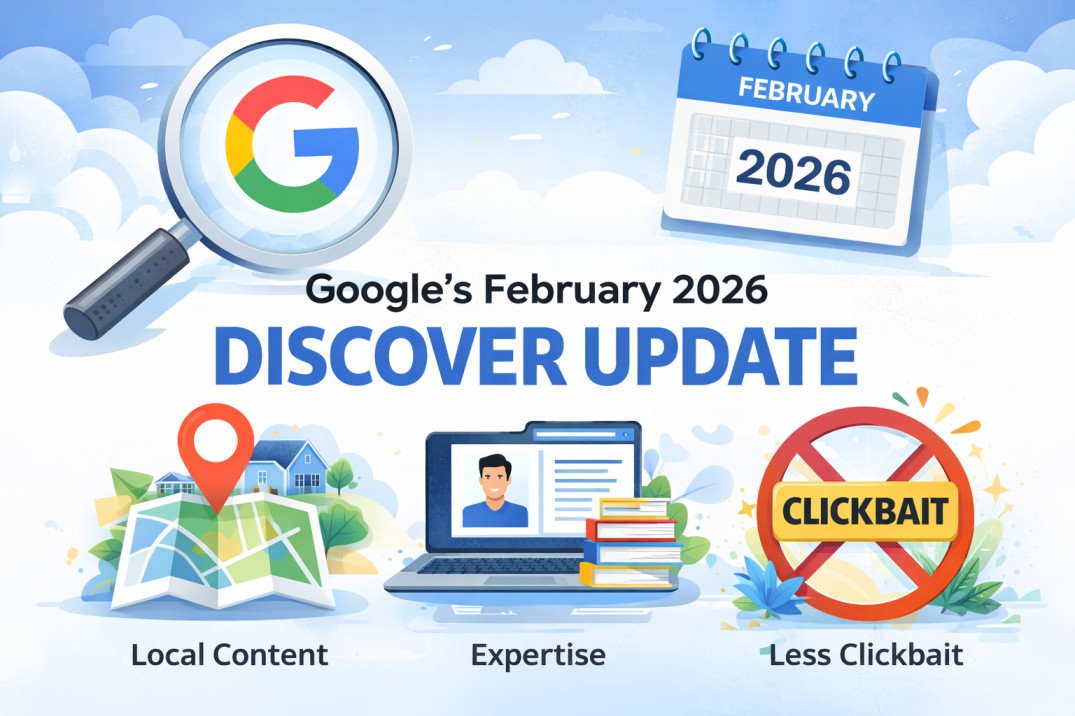
Google says this update improves the Discover experience in three big ways:
Local relevance matters more than before
Google is now giving strong preference to content created in the user’s country, especially for news, trends, and advice-based articles.
In simple terms,
if someone is in the United States, Google is more likely to surface:
- U.S.-based publishers
- Content written specifically for U.S. readers
- Articles that reflect local laws, seasons, culture, and real-world context
As a result, non-U.S. websites publishing generic content aimed at an American audience may see a decline in Discover traffic during the U.S. rollout phase.
Example:
- A U.S.-based home care blog discussing Medicare changes in Illinois is more likely to surface than
- A generic international health blog summarizing U.S. healthcare trends without local insight
Clickbait and sensational content are being filtered out
Google is actively reducing visibility for content that:
- Overpromises and underdelivers
- Uses shock-based headlines
- Relies on vague fear, hype, or exaggeration
This doesn’t mean headlines can’t be engaging — but they must be accurate, grounded, and useful.
Example:
Less effective:
“This One Hidden Home Care Mistake Is Destroying Families”
More effective:
“7 Early Signs Your Aging Parent May Need In-Home Care (According to Care Professionals)”
The second example sets expectations, offers real value, and signals expertise.
Expertise is judged by topic, not just the whole site
This is one of the most important (and encouraging) parts of the update.
Google clarified that:
- A site doesn’t need to be “about only one thing”
- But expertise is evaluated topic by topic
Google’s own example (simplified):
- A local news site with a long-running gardening section can be considered an authority in gardening
- A movie review site that posts one gardening article likely won’t be
Consistency and depth matter more than volume.
What does this means for E-E-A-T (Experience, Expertise, Authority, Trust)
This update reinforces Google’s long-standing Helpful Content and E-E-A-T signals.
To perform well in Discover, content should clearly show:
✔ Real experience
- Firsthand insights
- Local examples
- On-the-ground knowledge
✔ Demonstrated expertise
- Articles written or reviewed by professionals
- Clear topical focus over time
- Helpful explanations, not surface-level summaries
✔ Authority
- Consistent publishing in a niche
- Internal linking to related content
- Recognition as a go-to resource for a specific subject
✔ Trust
- Clear authorship
- Updated, timely information
- No misleading claims or exaggerated promises
Practical examples: What to focus on now
Example 1: Local service businesses (home care, restoration, legal, etc.)
What works better now:
- “How Winter Storms in Illinois Increase Basement Flooding Risks”
- “What Families in Forsyth County Should Know About Dementia Care Options”
What works less:
- Generic national articles with no local context
- Broad advice written for “everyone”
Example 2: Multi-topic websites
If your site covers multiple services or industries:
- Build content clusters per topic
- Publish multiple in-depth pieces per category
- Show continuity and growth in that subject
Google wants to see a pattern of expertise, not one-off posts.
Should you panic if Discover traffic fluctuates?
No — fluctuations are expected.
Google openly said:
- Some sites will see increases
- Some will see decreases
- Many will see no change
Discover traffic has always been volatile by nature, and this update doesn’t change that reality — it just clarifies why fluctuations happen.
Rollout timing and who is affected first
Google confirmed that the February 2026 Discover update is rolling out first to English-language users in the United States. The rollout is expected to take up to two weeks to complete, and Google plans to expand the update to all countries and languages in the coming months.
This means U.S.-focused publishers may notice changes in Discover traffic sooner, while sites targeting other regions may not see an immediate impact. As the update expands globally, those effects may level out or shift again depending on how well content aligns with local relevance and expertise signals.
Final takeaway: How to stay visible in Google Discover
If you want to align with this update, focus on:
- Writing for real people in real places
- Replacing hype with clarity and usefulness
- Building deep expertise in specific topics over time
- Publishing timely, original content that reflects firsthand knowledge
When content is genuinely helpful, locally relevant, and written by people who clearly know the subject — Google Discover tends to follow.
Related News: Google’s December 2025 Core Update Is Rolling Out
About the Author: Patrick Panayotov