Have you noticed your website traffic declining even though your rankings haven’t really changed? You’re not the only one seeing this shift.
Today, tools like ChatGPT, Perplexity, and Google’s AI Overviews are answering user questions directly—often before anyone clicks on a website. That means fewer visits, even if your pages are still ranking well.
If your brand isn’t being mentioned in those AI-generated answers, you could be losing visibility without any clear indication in your analytics. And that’s the tricky part—traditional SEO tools don’t track what’s happening inside these AI responses.
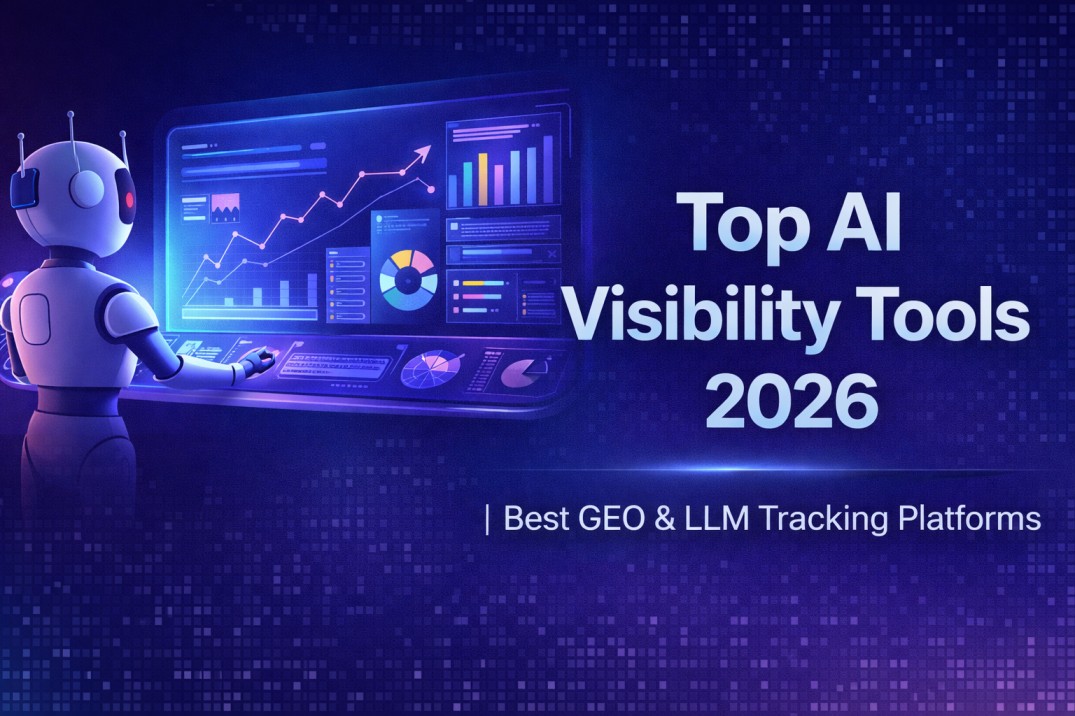
This is where AI visibility tools are becoming essential.
They help you understand:
- Whether your brand appears in AI-generated answers
- Which platforms or models are referencing your content
- How frequently your content is being cited
In simple terms, these tools give you a clearer picture of how visible your brand is across large language models (LLMs) and AI-powered search environments—so you can measure the impact of your content beyond traditional rankings.
The good news is that several tools are already stepping up to fill this gap. Some well-known SEO platforms have started integrating AI tracking features, while newer tools are focused entirely on monitoring LLM mentions and citations.
Why Are AI Visibility Tools Important?
The way people search online is rapidly evolving. Instead of clicking through multiple websites, more users are turning to AI platforms to get direct answers instantly.
In fact, industry projections suggest that traditional search engine usage could decline significantly in the coming years as AI tools and virtual assistants become more widely adopted.
This shift is part of what’s known as the “zero-click” trend—where users find what they need without ever visiting a website.
As a result, understanding where and how your brand appears within AI-generated responses is becoming just as important as tracking your rankings on Google.
The Measurement Gap AI Creates
One of the biggest challenges with AI-driven search is visibility. Unlike traditional SEO, where you can track clicks, impressions, and rankings, AI platforms don’t provide clear analytics on how often your content is being used or referenced.
AI visibility tools help close that gap.
They allow you to:
Track when your brand is mentioned in AI-generated responses
Identify which platforms (like ChatGPT or Perplexity) are referencing your content
Monitor trends over time to see what’s improving—or declining
This gives you a clearer understanding of how your content performs beyond traditional search.
Think of It Like Analytics for AI Search
AI visibility tools function much like Google Analytics—but for AI ecosystems.
Instead of guessing what content is working, you can:
- See which topics are being picked up by AI
- Understand what formats or structures earn citations
- Identify gaps where your competitors may be outperforming you
This insight allows you to refine your content strategy with data—not assumptions.
Traditional SEO Isn’t Enough Anymore
Metrics like rankings, traffic, and backlinks are still important—but they no longer tell the full story.
A growing portion of your audience may:
- Discover your brand through AI-generated answers
- Engage with your content without ever clicking through
- Form opinions about your authority based on AI responses
Even without a website visit, these interactions still impact your brand visibility and credibility
Top AI Visibility Tools Must watch on 2026
1. Uber suggest
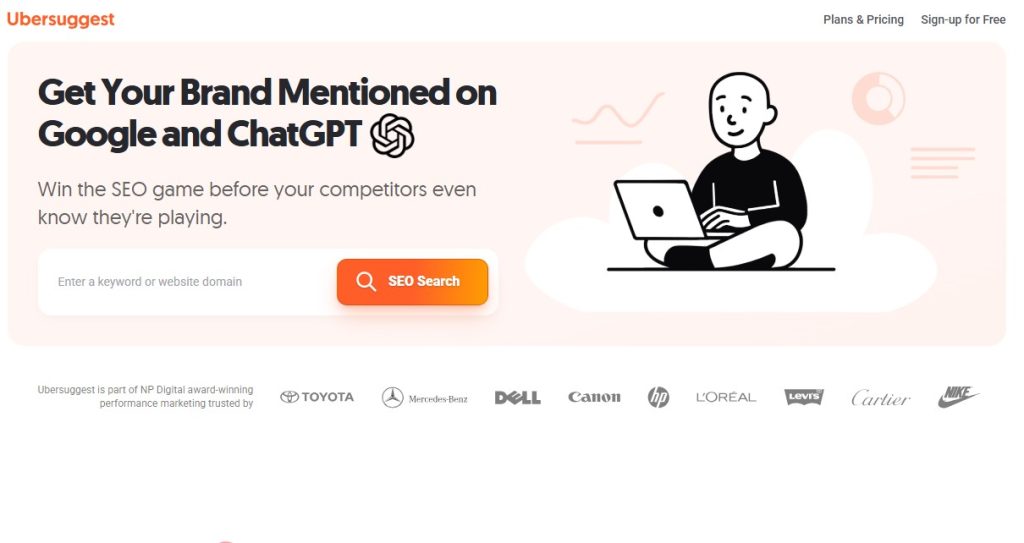
Ubersuggest has recently introduced AI visibility features as part of its SEO platform, making it easier to understand how your brand performs beyond traditional search engines.
One of the biggest advantages is the ability to track AI citations alongside your existing SEO data—all within a single dashboard. This allows you to connect the dots between your search performance and how often your content is being referenced in AI-generated responses.
Ubersuggest’s AI visibility feature provides several key insights that help you measure and improve your presence across AI platforms:
Brand Visibility
This metric shows how frequently your brand appears in AI-generated answers over a specific period. It helps you understand whether your content is being recognized and referenced by AI tools.
Industry Rank
Industry rank compares your AI visibility against other brands in your niche. It gives you a clear view of where you stand and how competitive your presence is within your market.
Top Prompts
This feature highlights the most common questions users are asking AI platforms related to your industry. It also shows whether—and how—your brand is being included in those responses.
This is especially valuable for identifying new content opportunities.
Competitor Visibility
This metric allows you to compare your brand’s AI presence with competitors over time. You can track trends, spot gaps, and identify where competitors may be gaining more visibility.
2. Writesonic
For companies focused on Generative Engine Optimization (GEO), Writesonic stands out as one of the more action-driven platforms in the AI visibility space. It goes beyond simply tracking brand mentions—helping marketing teams actively improve how their content appears in AI-generated responses.
Instead of just reporting performance, Writesonic provides both the insights and the next steps, making it easier to turn data into real visibility gains.
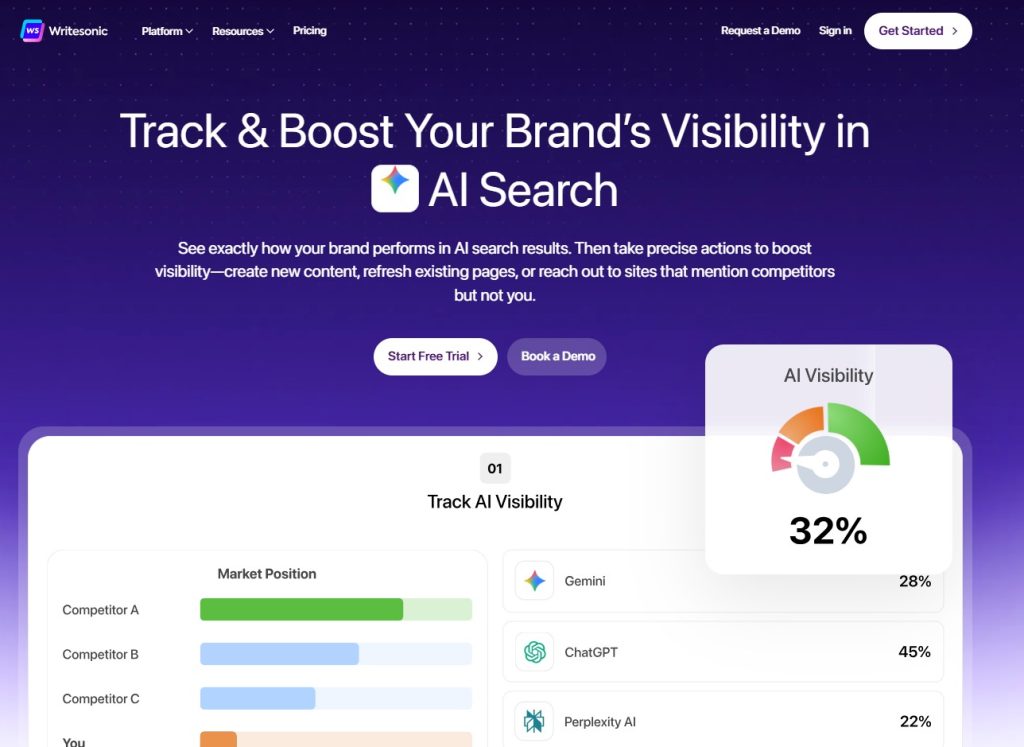
The dashboard provides a comprehensive view of your brand’s presence across major AI platforms, including ChatGPT, Gemini, Claude, Perplexity, and Google AI Mode.
It tracks:
- Brand mentions
- Share of voice
- Performance compared to competitors
Prompt-Level Analytics
This feature reveals which user queries are triggering AI-generated answers—and whether your brand is included.
It helps you:
- Identify high-impact prompts
- Discover where your brand is missing
- Optimize content around real user questions
Pros & Cons
Pros:
- Combines AI tracking with guided optimization workflows
- Identifies missed citations and competitor gaps
- Unified monitoring across major generative engines
- Action Center simplifies GEO execution
Cons:
- Advanced capabilities are more valuable for mid-to-large teams
- Some deeper analytics and workflows are limited to higher-tier plans
- Less focused on traditional SEO elements like backlink audits
3.Otterly.AI
Otterly.AI is quickly gaining attention in SEO circles as one of the most affordable AI visibility tools currently available. It’s an excellent option for freelancers, small businesses, and growing teams that want to explore AI search tracking without the cost of enterprise-level platforms.
Key Features Include:
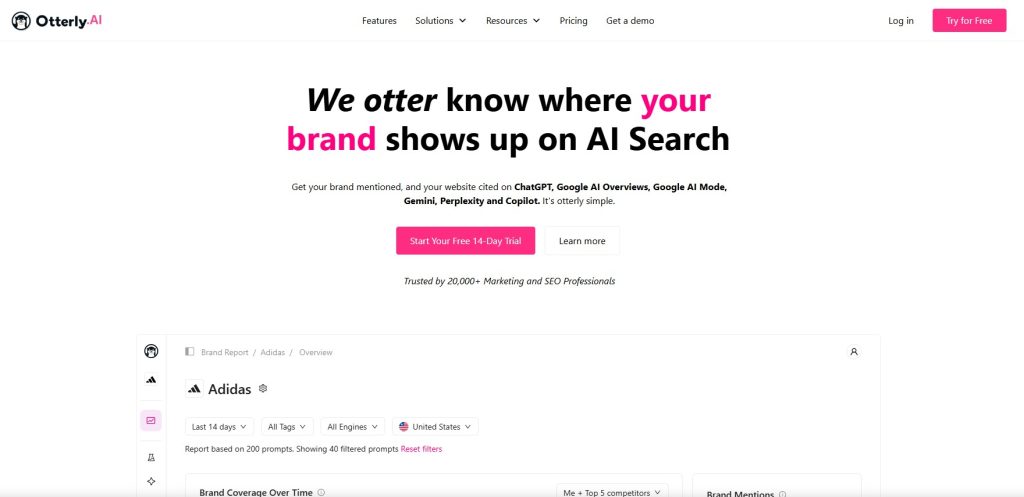
Otterly.AI offers a simple and user-friendly setup, making it easy for beginners to get started with AI visibility tracking. It converts target keywords into LLM-based prompts to help monitor how your brand appears in AI-generated results. The platform also includes a GEO (Generative Engine Optimization) audit feature, which provides guidance on improving content for better visibility in AI search environments. Additionally, it supports answer engine tracking across multiple AI platforms, helping users monitor brand presence in evolving search experiences.
Best For:
Otterly.AI is best suited for freelancers, small businesses, and growing teams looking for an affordable and straightforward way to start tracking AI search visibility without investing in enterprise-level tools.
Pros & Cons:
Pros:
Affordable and accessible for smaller teams, easy to set up and use, helpful GEO audit feature, and supports multiple AI search platforms.
Cons:
Limited data-driven insights and trend analysis lacks AI crawler visibility tracking, and some advanced data access may require additional costs.
4. Semrush AI Toolkit
Semrush has expanded its platform by adding AI visibility tracking directly into its existing SEO suite, making it a seamless addition for current users. The tool monitors brand citations across major AI platforms and introduces a visibility score, similar to domain authority, that helps you measure your AI presence against competitors over time.
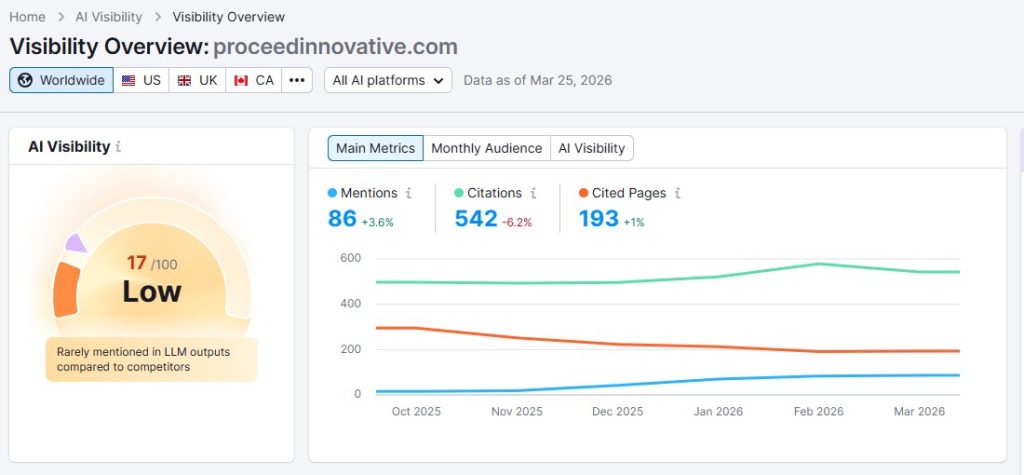
One of its biggest advantages is the integration with traditional SEO data. You can identify which pages earn both backlinks and AI citations, and analyze whether content ranking in search engines also appears in AI-generated responses. This unified view provides deeper insights into what’s working across your overall digital strategy.
Best For:
Semrush is best suited for agencies, in-house marketing teams, and businesses already using Semrush who want to integrate AI visibility tracking into their existing SEO workflow without switching platforms.
Semrush cons:
- Built into a trusted SEO tool
- Developing quickly
Semrush cons:
- Charges for more users
- No AI crawler visibility analysis
5. Peec AI
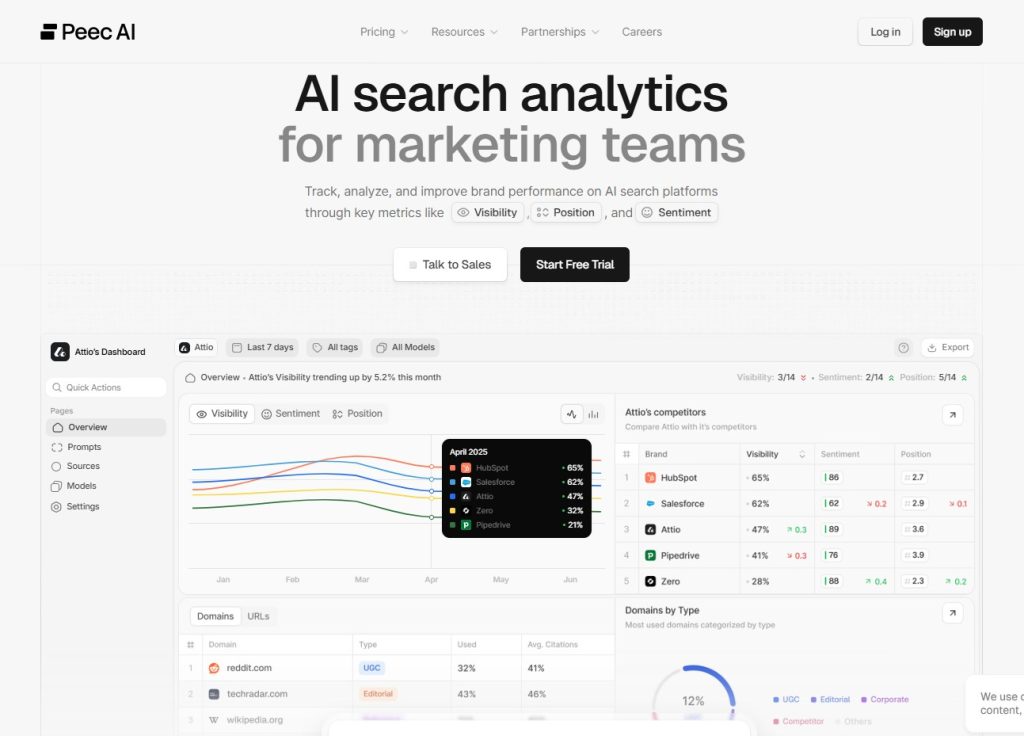
Peec AI is a strong contender for agencies and enterprise marketing teams looking to track and present AI visibility data. One standout feature is Pitch Workspaces, which allows you to create and share AI visibility reports with clients—making it especially useful for winning new business and showcasing brand performance against competitors.
The platform offers a clean, user-friendly interface and integrates with Looker Studio, enabling you to pull live AI visibility and source data directly into custom dashboards. Peec also includes a layer of AI-driven suggestions, helping users identify relevant prompts and competitors to track.
Another advantage is the depth of data per prompt, including daily tracking, unlimited countries, and access to multiple AI models within your plan—making it more generous than some competing tools in terms of raw data access.
Best For:
Peec AI is best suited for agencies and enterprise teams that want an easy-to-use platform for tracking AI visibility and presenting insights to clients through shareable reports and dashboards.
Pros & Cons:
Pros:
Pitch Workspaces for client reporting, intuitive and easy-to-navigate interface, generous data per prompt, Looker Studio integration, and daily tracking across multiple regions.
Cons:
Limited actionable insights and trend analysis lacks AI crawler visibility tracking, and baseline plans only include tracking for three answer engines (ChatGPT, Perplexity, and Google AI Overviews), with additional platforms available at extra cost.
6. Similarweb
Similarweb, long known for its reliable web traffic and competitor intelligence data, has expanded into AI visibility tracking with its AI Brand Visibility tool. This feature combines traditional SEO data with Generative Engine Optimization (GEO) insights to help businesses understand how AI platforms are contributing to their traffic.
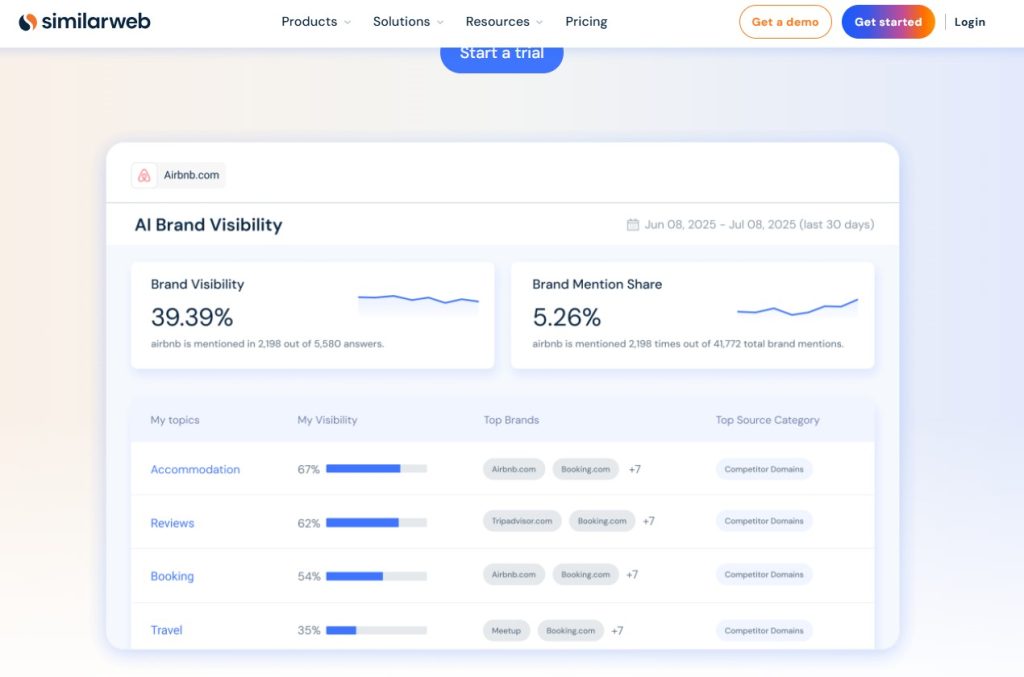
With Similarweb, you can identify which keywords and prompts are driving traffic, uncover top-performing content sources, and analyze traffic distribution across AI channels. This allows you to see exactly where your visibility is coming from and which platforms are generating the most impact.
A standout feature is its ability to track referral traffic from AI chatbots, presenting the data in a format similar to GA4 reports. It also highlights top-performing topic themes, giving you actionable insights to refine your content strategy and improve performance in AI-driven search environments.
Best For:
Similarweb is best suited for data-driven marketing teams, SEO professionals, and businesses focused on competitor research and traffic analysis, especially those who want to connect AI visibility with real traffic outcomes.
Pros & Cons:
Pros:
Strong traffic and competitor data, integrates AI SEO and GEO insights, tracks AI referral traffic, provides actionable topic and prompt-level insights, and offers clear traffic distribution reporting.
Cons:
Does not provide conversation-level data or brand sentiment analysis, which may limit deeper understanding of AI-generated responses and user perception.
7. ScrunchAI
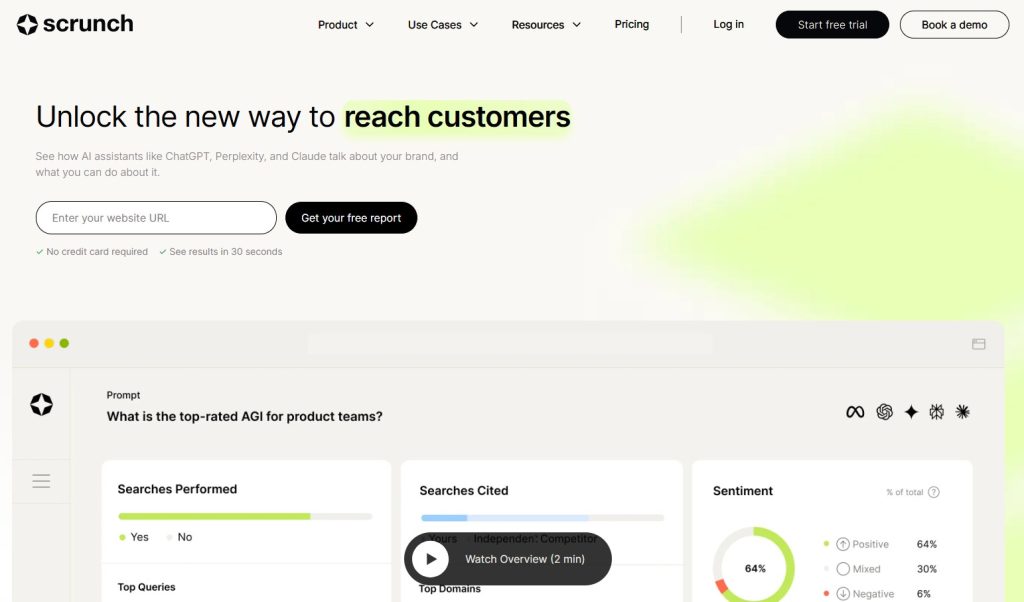
ScrunchAI is a specialized platform focused entirely on AI visibility and LLM citation tracking, making it a strong option for teams already using other tools for traditional SEO. It monitors brand mentions across major AI platforms, including ChatGPT, Claude, Perplexity, Google AI Overviews, and Bing AI, as well as emerging answer engines.
The platform offers real-time tracking, alerting users to changes in citation frequency, new platform visibility, or sudden drops in presence. One of its standout features is its ability to measure both citation frequency and quality, helping you understand whether your brand is positioned as a primary or secondary source—and even flagging potential misinformation.
Best For:
ScrunchAI is best suited for SEO teams, agencies, and brands focused specifically on AI search visibility, especially those who already have traditional SEO tools and want dedicated LLM citation tracking.
Pros & Cons:
Pros:
Tracks multiple AI platforms, real-time visibility alerts, measures citation quality and frequency, provides actionable content recommendations, and includes query simulation for competitive insights.
Cons:
Newer platform with a developing track record, may lack the historical data depth of established tools, and requires pairing with other tools for full SEO coverage.
8. Rankscale AI
Rankscale AI is a purpose-built platform designed to help businesses track and improve their visibility across AI-driven search engines and LLMs. Unlike traditional SEO tools, it focuses specifically on how often and how effectively your brand appears in AI-generated responses.
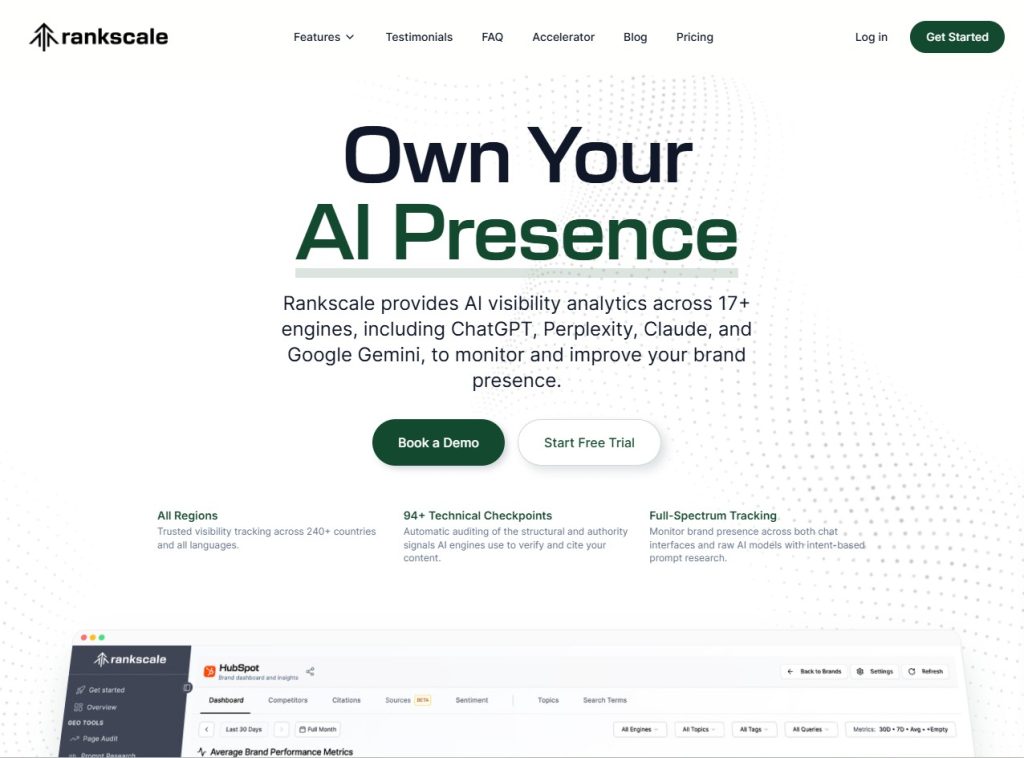
The platform monitors performance across a wide range of AI systems, including ChatGPT, Perplexity, Claude, and other emerging answer engines. It provides a central dashboard where you can track brand mentions, citation frequency, and overall visibility trends across different prompts and topics.
One of Rankscale’s key strengths is its competitive benchmarking capability. It allows you to compare your brand’s presence against competitors and understand which sources AI platforms are relying on. This helps uncover gaps in your content strategy and identify opportunities to increase your share of voice in AI results.
Rankscale also offers AI readiness insights, analyzing your content and site structure to highlight areas that may impact how AI models interpret and surface your brand. These insights can help guide improvements for better performance in generative search environments.
Best For:
Rankscale AI is best suited for marketers, Local SEO professionals, and digital marketing agencies who want deeper insights into AI search performance and are focused on improving brand visibility across multiple LLM platforms.
Pros & Cons:
Pros:
Covers a wide range of AI platforms, strong competitor comparison features, detailed visibility tracking, and provides actionable insights for improving AI search presence.
Cons:
Usage-based pricing can increase with scale, may require pairing with other tools for content execution, and focuses more on output tracking than technical AI crawler analysis.
9. Profound
Profound is an enterprise-focused platform built to deliver deep intelligence on how AI platforms represent your brand, going far beyond basic citation tracking. Instead of just measuring visibility, it analyzes the context and quality of brand mentions across AI-generated responses.
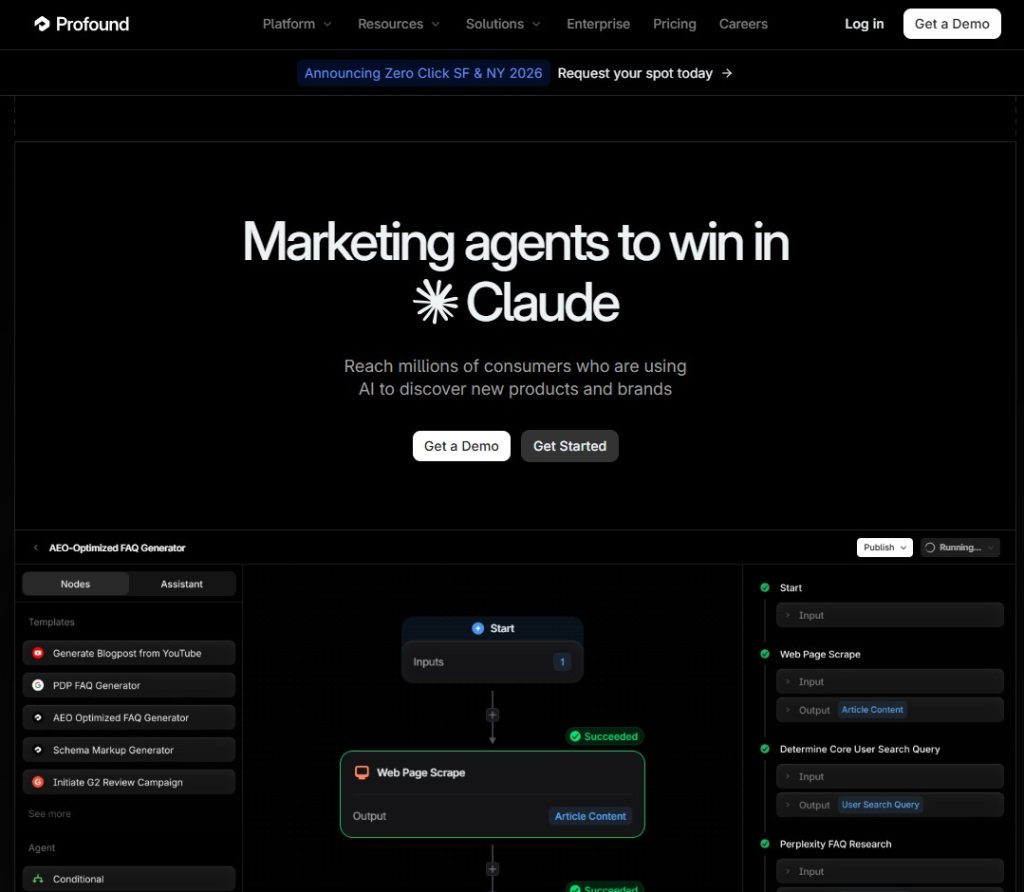
The platform evaluates sentiment, helping you understand whether your brand is being presented positively, neutrally, or negatively. It also tracks competitive positioning, showing which competitors are mentioned alongside your brand and in what context. Additionally, Profound identifies authority gaps and strengths, highlighting the topics where your brand is recognized as a leader versus areas dominated by competitors.
A major strength of Profound is its customization and scalability. The platform offers tailored dashboards, integrates with existing systems, and adapts reporting to fit your internal workflows. It also supports large-scale tracking across hundreds of queries and includes alert systems that notify you of sudden changes in AI visibility.
Best For:
Profound is best suited for enterprise brands, large marketing teams, and organizations in competitive or regulated industries that require deep, customized insights into AI visibility and brand perception.
Pros & Cons:
Pros:
Advanced sentiment and contextual analysis, strong competitive intelligence features, highly customizable dashboards, scalable tracking, and enterprise-level reporting capabilities.
Cons:
High cost with annual contracts, not suitable for small businesses or freelancers, and requires a larger operational setup to fully leverage its capabilities.
10. Clearscope
Clearscope, long recognized as a leader in content optimization for SEO, has expanded its capabilities into Generative Engine Optimization (GEO). Its AI visibility features are a natural extension of its existing platform, making it especially valuable for content-focused teams adapting to AI-driven search.
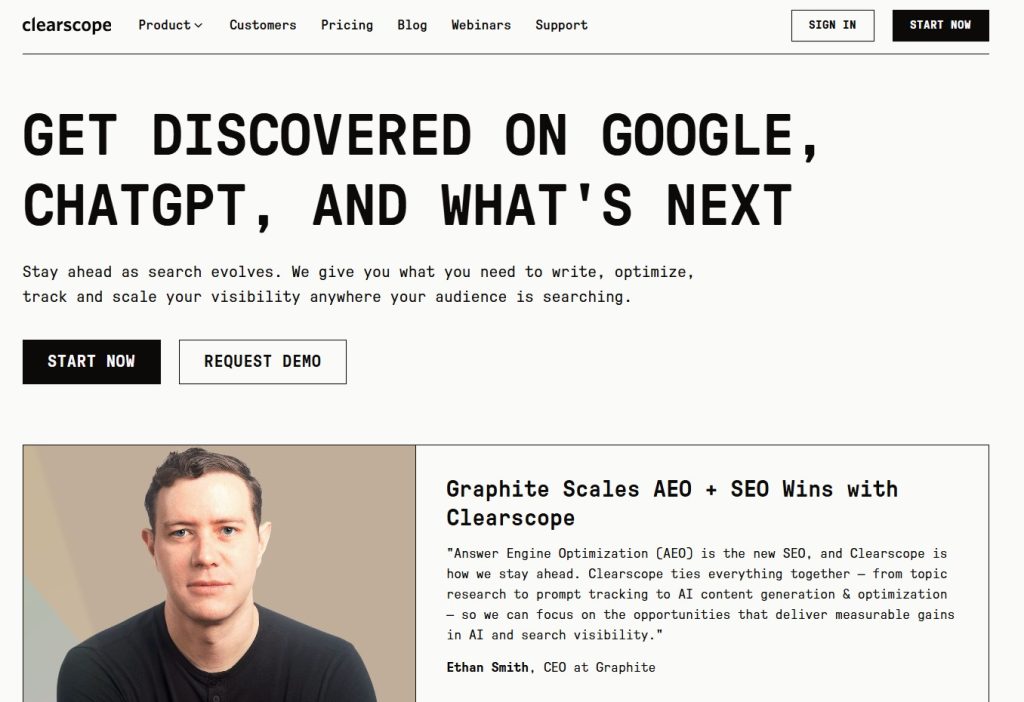
One of its standout capabilities is the connection between Content Inventory and AI Cited Pages, allowing you to see which pieces of content are actually being referenced in AI-generated responses. This helps bridge the gap between content creation and real AI visibility performance.
Clearscope also offers a powerful AI Draft feature, enabling users to generate high-quality, optimized content while maintaining brand voice and structure. Combined with its traditional optimization tools, it helps ensure content is both search-friendly and AI-ready.
Additionally, its Topic Exploration feature supports a broader, cluster-based approach to content strategy, helping you cover entire topic areas rather than focusing on single keywords—an important factor for improving visibility in LLM-driven results.
Best For:
Clearscope is best suited for content marketers, SEO teams, and agencies that prioritize content creation and optimization, and want to enhance their strategy for AI-driven search environments.
Pros & Cons:
Pros:
Industry-leading content optimization capabilities, strong GEO-focused features, excellent AI content creation tools, and effective topic clustering for broader search visibility.
Cons:
No custom prompt tracking, limited LLM coverage (currently ChatGPT, Gemini, and Perplexity), and may require additional tools for competitor analysis and deeper AI visibility tracking.
Which LLM Monitoring Tool Should You Choose?

Choosing the right AI visibility tool isn’t always straightforward—and in many cases, one tool alone may not cover everything you need. The current landscape is still evolving, and measuring visibility across LLMs can feel like navigating a black box. Unlike traditional SEO, much of the data from AI platforms is still limited or inaccessible.
As AI search continues to mature, we can expect better data access—similar to how Google introduced tools like Keyword Planner for advertisers. But even then, there won’t be a one-size-fits-all solution. Just like SEO, success in AI visibility will require a combination of tools, strategies, and ongoing optimization.
Beyond the tools covered in this guide, the space is rapidly growing. Platforms like AthenaHQ, Rankshift, XFunnel, Knowatoa, Evertune, Superlines, and Waikay are emerging with promising capabilities. Others, such as Scrunch and SISTRIX, are still in early stages but are gaining attention within SEO communities as tools to watch.
While the ecosystem may feel fragmented today, waiting for perfect data isn’t the answer. The real opportunity lies in starting now—testing tools, analyzing patterns, and actively shaping how AI platforms represent your brand.
About the Author: Jasmine Panayotov