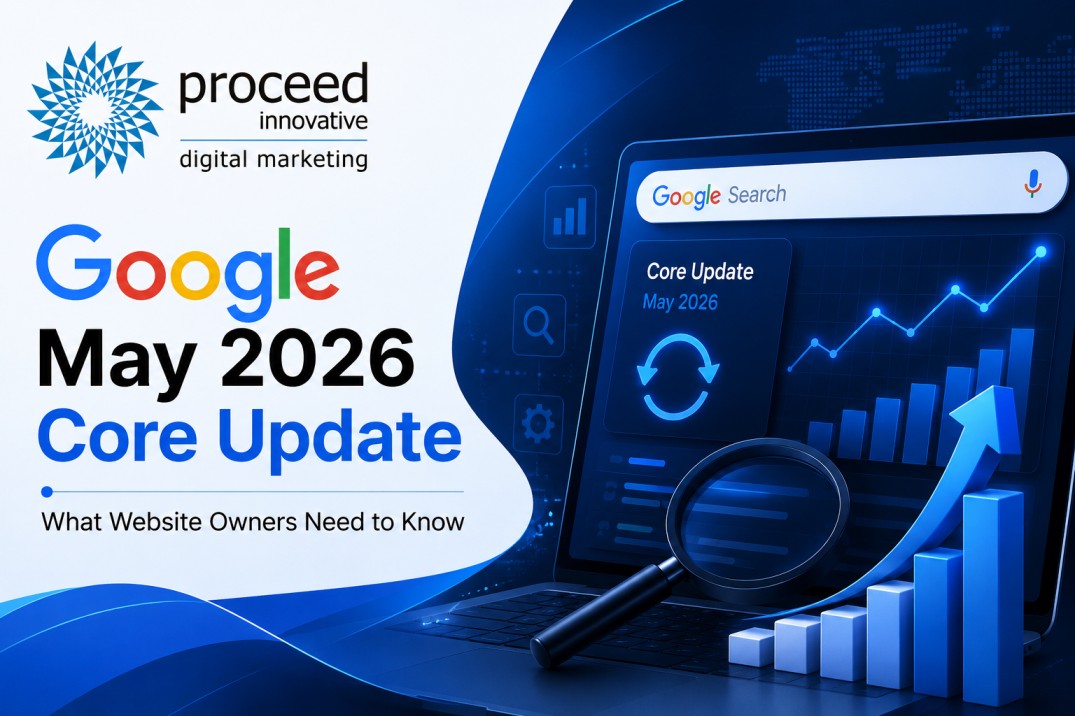
Google started rolling out its May 2026 Core Update on May 21st. The process should take about two weeks. According to Google, this is a routine core update intended to improve search results by surfacing more relevant and satisfying content from a wide range of websites.
Google posted on LinkedIn:
Today we released the May 2026 core update to Google Search. This is a regular update designed to better surface relevant, satisfying content for searchers from all types of sites. The rollout may take up to 2 weeks to complete.
Note: If you noticed your rankings or traffic numbers swinging wildly over the last few days, you aren’t imagining things. The update is active right now and is already shifting how search results look for many queries.
Is This a Big Deal?
Yes. Here is the recent Google update timeline to put it in context:
- March 2026 core update: 12 days (March 27 to April 8)
- March 2026 spam update: Under 20 hours (March 24 to March 25)
- February 2026 Discover core update: 22 days (February 5 to February 27)
The May 2026 update is the next step in Google’s long-term ranking evolution after a huge volatility seen during the March 2026 core update earlier this year. Google is now rolling out the next generation of its core ranking systems powered by advanced, Gemini-based quality models and the emphasis is on surfacing original, helpful and people-first content and penalizing automated, ad-bloated content.
What Should You Do Right Now?
Google used to offer this advice on what to do if a core update damages your site: There’s nothing specific to do to reverse the impact of a core update. Negative rankings impact doesn’t necessarily mean there is anything wrong with your pages. you might see some recovery in between core updates, but the biggest changes are usually after another core update.
Don’t panic and don’t make big changes yet
The rollout of the update is ongoing. The rankings can change for up to 2 weeks. Wait until around June 4 to draw any conclusions.
Check Google Search Console
Check your Performance Report. Use date filter to compare May 21+ vs prior period. Find out which pages lost clicks/impressions.
Audit your content quality
According to Google: write content to help a user, not create content for bots. The only change required from content creators due to this change is to continue to make people happy with the correct content for them.
Look at what is winning
With Google’s most recent update, roughly 80% of the top results have transitioned away from the aggregated results toward branded and official websites as well as highly-aggregated data sources. If authoritative and original sources are currently winning, then your goal is to also be an authoritative and original source.
Focus on E-E-A-T
Experience, Expertise, Authoritativeness, and Trustworthiness. Google rewards content created and written by people who can define the topic with real experience and knowledge of the subject.
What Google Will NOT Tell You
Google never reveals exactly what changed in a core update. They will not tell you which signals got more weight, or which types of pages were targeted. What we do know from pattern analysis of past updates:
- Pages with thin or duplicate content lose rankings
- Pages that genuinely help users tend to recover or improve
- Sites with strong brand signals and backlinks tend to make weather updates better
- AI-generated content with no human expertise or editing is increasingly at risk
For Local Business Owners
If you run a local service business — like a home care agency, dental practice, law firm, or similar — here is what to focus on:
- Make sure your Google Business Profile is fully complete and active
- Ensure your service pages are detailed, locally specific, and genuinely helpful
- Add real customer reviews and respond to them
- Make sure your website loads fast and works well on mobile
- Create locally relevant blog content that answers questions your customers are actually asking
Bottom Line
With any core update, you often see significant volatility in Google search results and search rankings. These updates may improve visibility for your site or your clients’ sites, but you may also see fluctuations or declines in rankings and organic search traffic.
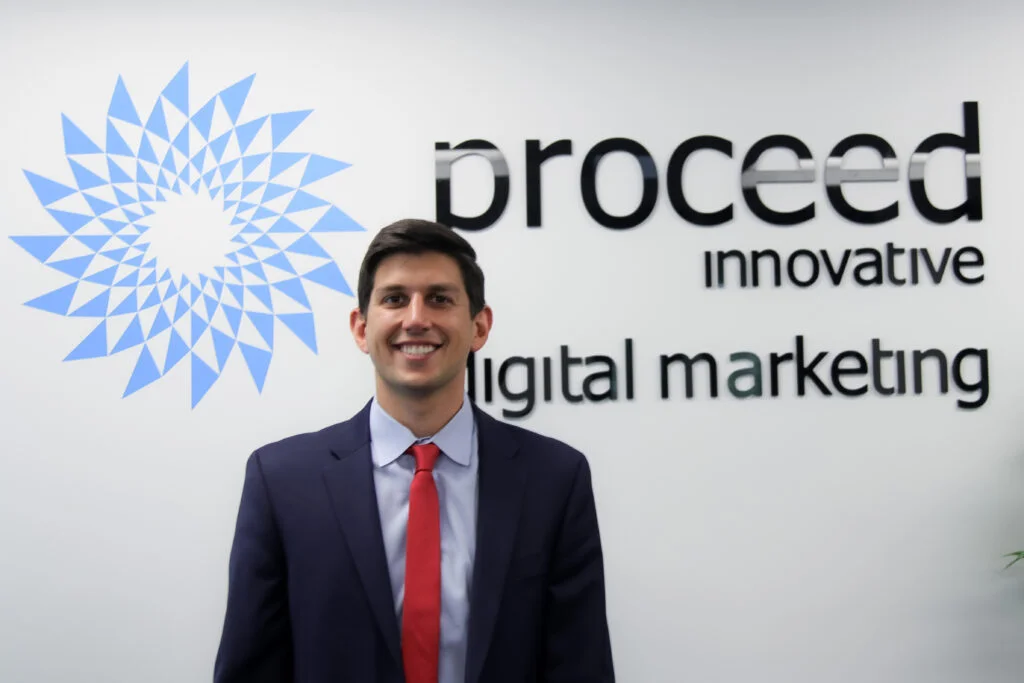
About the Author: Patrick Panayotov